Long before the 3D game I am building now, there was a prototype: a 2D
pixel game I lived in for quite a while. Everything on this page comes from back then — art I had
an AI generate as a stand-in, so the systems would have something to push around. It was never
real art, and it is definitely not what the finished game will look like.
I am keeping it because every piece is a trace of the road I took: which ones fell
apart, which ones worked, and how long it took to learn what a cat cafe should actually feel like
to play. One day the real game will look nothing like this — and that is exactly why it is worth
keeping around. 🐈
Everything here is temporary art from the prototype. None of it is the real game's art. 🎨
People in the shop
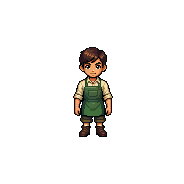
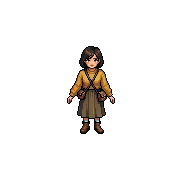
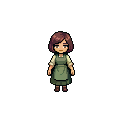
The very first barista I generated — one look and you can see the camera tilt got baked into the sprite itself, so it was dropped before it ever reached the game.The first player's walk cycle, 6 frames in a single strip — the game slices it back into frames as you play.Player version two, the barista in the green apron — the one that finally got a “that's excellent” and stayed in the game for a good while.Version three's walk — redrawn smaller, down to 92 pixels, so everyone in the game would read as one family.The player sitting down — generated with no chair at all, because the chair is a real object in the game. The sprite just has to sit on thin air convincingly.The shop's first customer — the camera looked down so steeply that the lean got painted into the art, and in the end the whole set had to be redone.The woman in the yellow cardigan — the “root” character every other person in the cast was edited out of.The customer in the navy suit — edited from the root, changing only the hair and the outfit, so her face and proportions stay in the same family.The customer with glasses — a gender change edited from that same root character, and the head and proportions came through intact.A female shop owner — one of the redesigns with a bigger head, about three heads tall. Still only a test; it was never actually chosen.Crouching down to play with a cat, 9 frames — and the prompt must never mention a cat, or a ghost one gets painted into her hands.
Cats
A tiny 48-pixel calico — the earliest cat, so small you can barely make out the patches.The tabby, the first cat that actually walked around the shop — the side view is the only angle that tells you whether it is really standing on four legs.The tabby's walk cycle, 9 frames — the prompt had to insist it never turn its face to the camera mid-stride, or it would sneak a glance.
Things in the shop
One rug from the 64-pixel tile set — floor, wall, counter and rug were all generated together as one batch.A cupcake from the menu — food icons were generated one at a time, for the menu board and the order slips.
On screen
A blank order slip — art only supplies the paper; the game prints the words on top, so they can change language.The peg that clips the order slip — it has to be a separate piece, because if it were generated fused to the paper the game could never move or rotate it.